
Stepping into the batter's box is one of the most isolating yet exhilarating moments in sports. The pitcher stares you down, the crowd hums in the background, and for a split second, time seems to stand still. In that moment, your confidence relies entirely on your preparation. While many players obsess over the mechanics of their swing or the follow-through, the best batters know that success starts with the foundation—their batting stance.
A proper batting stance serves as the launchpad for every hit. It dictates your balance, your ability to react, and your ability to generate power effectively. You might have the fastest hands in the league, but without a solid setup, you will struggle to catch up to high-velocity pitching or adjust to breaking balls. Below, our complete guide to batting stance setup explores the critical components of a batter’s foundation, breaking down the mechanics of posture, balance, and spine angle to help you dominate at the plate.
The Foundation of a Great Stance
We cannot overstate the importance of the batting stance to a hitter’s success. It places the hitter in an athletic position that allows for explosive movement. While you will see unique variations among Major League players—some stand tall, some crouch low, some keep their hands high—the fundamental principles of kinetics remain the same. The goal is to create a position that maximizes potential energy so you can release it as kinetic energy through the ball.
Achieving Balance and Comfort
Your journey to a better swing begins with your feet. A balanced stance provides the stability to control your body throughout the violent motion of a swing. You should position your feet slightly wider than shoulder-width apart for a solid base of support. If your feet are too close together, you risk losing balance during the stride; too far apart, you limit your mobility and athleticism.
Comfort is equally important. When your muscles are tense, they move more slowly. You want to stand in the box with a sense of "relaxed readiness." Your knees should be slightly bent, putting you in an athletic posture similar to a shortstop ready to field a ground ball.

Mastering Weight Distribution and Hand Position
How you distribute your weight at setup sets the tone for your load. A neutral starting point typically involves a 50-50 weight distribution between your front and back feet. This neutrality allows you to react to pitches in any location. As you begin your load mechanism, you will naturally shift weight, but starting with an even balance prevents you from committing too early.
Your hand position dictates the path your bat will take to the ball. You want to position your hands near your back shoulder, keeping the bat in a path that leads directly to the hitting zone. The concept of the "T" is vital here.
At the point of contact, your arms and the bat should form a "T" shape perpendicular to your torso. This position generates the maximum amount of resistance and power against the ball. Knowing this, you should set your hands so you can reach this power position efficiently.
The Critical Role of Spine Angle
One of the most misunderstood aspects of the batting stance is the spine angle. Many hitters believe they should stand perfectly upright or that their spine angle should remain static regardless of the pitch. However, batters should adjust their spine angle to the pitch location to maintain the powerful "T" position.
To reach a low pitch effectively, you must increase the forward tilt of your spine towards home plate. Conversely, for a high pitch, you need less forward tilt. This adjustment allows your bat to stay on plane with the pitch while maintaining the structural integrity of your upper body mechanics. If you try to hit a low pitch while standing straight up, your hands will drop, your barrel will lag, and you will lose power.
The most efficient way to handle this is to set your spine angle at the setup phase. You should aim to set your spine angle perpendicular to the center of the strike zone. This approach splits the difference between a high pitch and a low pitch. By starting in the middle, you minimize the amount of adjustment necessary during the swing.
Drills to Solidify Your Stance
Understanding the theory is one thing, but building muscle memory requires persistent repetition. Drills help translate concepts into physical reality. By incorporating specific exercises into your training routine, you can ingrain these proper mechanics until they become second nature.
The PVC Pipe Drill for Posture
The PVC Pipe Drill is an excellent method for correcting posture and rotating your body correctly while swinging. To perform this drill, you need a long PVC pipe. Hold the pipe across your chest, crossing your arms over it to keep it secure against your shoulders. Assume your batting stance.
Visualize a pitch coming toward you. As you simulate a swing by rotating your torso, pay close attention to the angle of the pipe. If you are simulating a swing on a low pitch, the end of the pipe representing the barrel should point down toward the contact point, and your shoulders should tilt accordingly.
This drill forces you to feel the proper spine angle and shoulder tilt without the distraction of hitting a ball. It exposes flaws immediately. If you rotate flat on a low pitch, the pipe will remain horizontal, showing you exactly why you would miss or top that ground ball in a real game.

The Swing Path Trainer
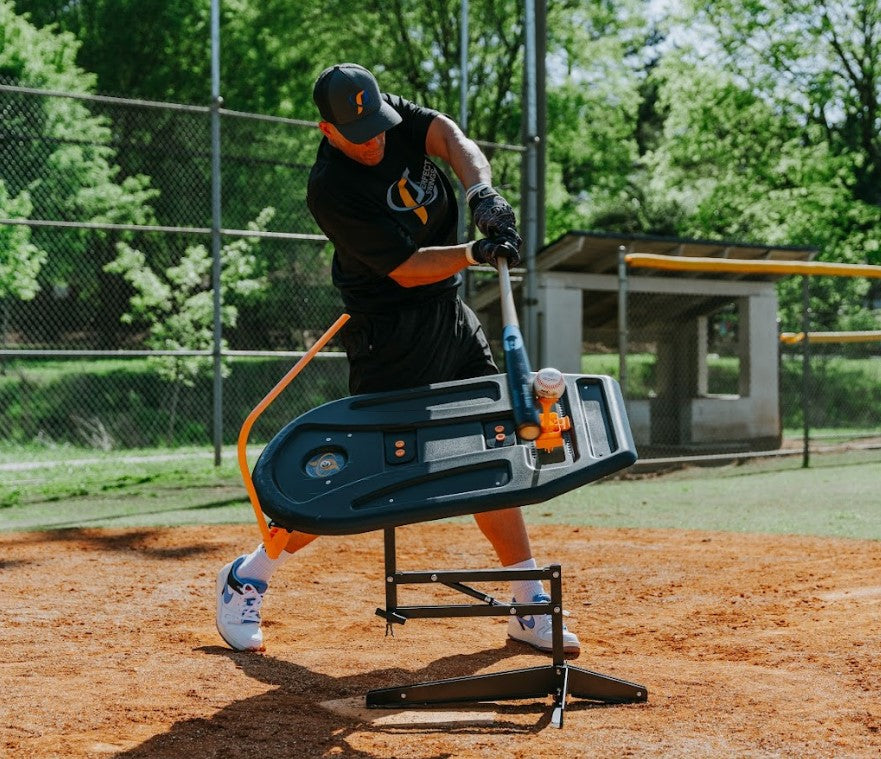
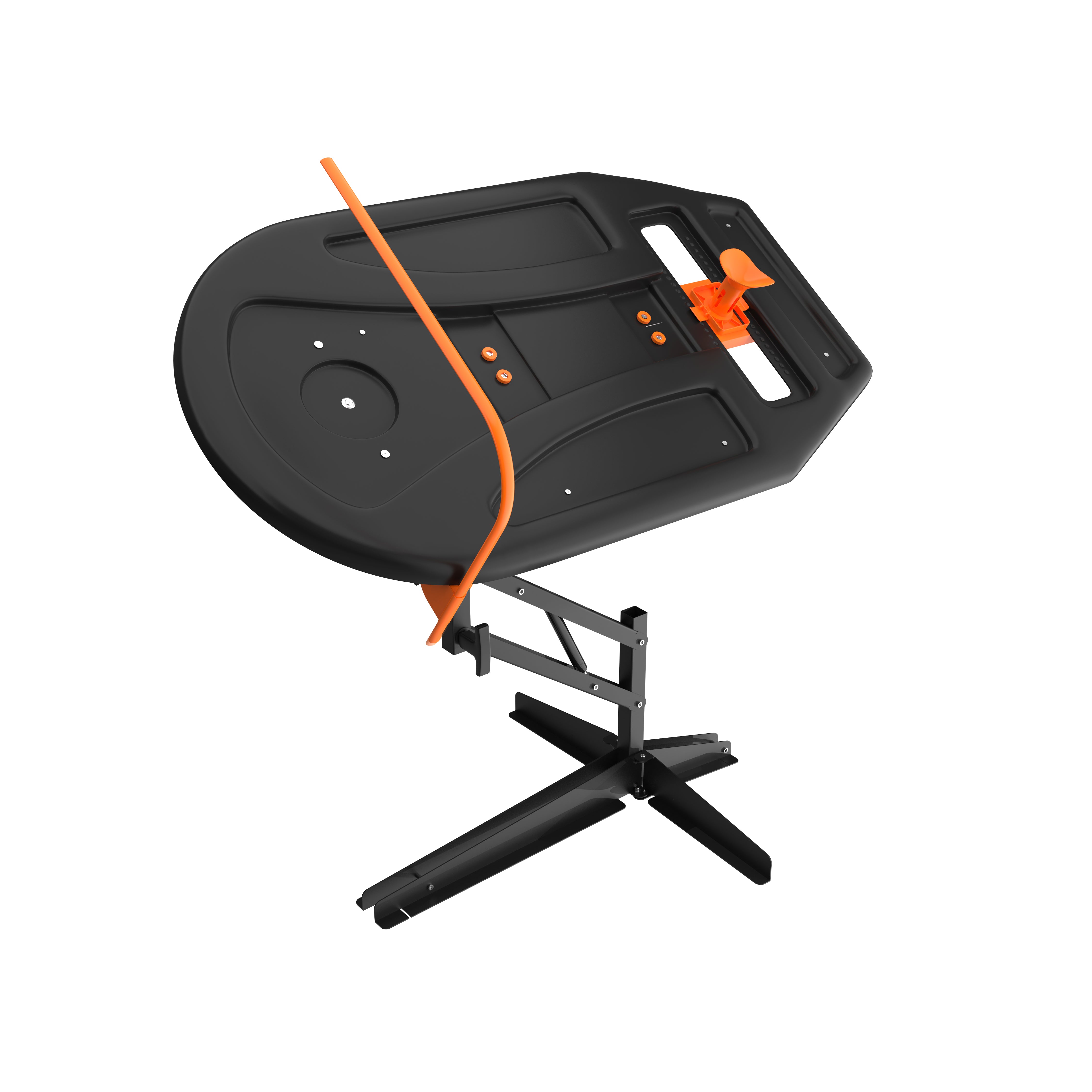
Feedback is crucial for improvement. The Swing Path Trainer from Perfect Swings USA forces you to keep your bat in the hitting zone longer and on the correct plane. It utilizes a guide board that you can adjust to different angles.
When you use this trainer, you receive immediate feedback. If your swing path is incorrect—for example, if you chop down at the ball or drop your hands—you will hit the board or miss the guide completely. The Swing Path Trainer is effective for baseball players and works as a softball swing trainer as well.
You can use the Swing Path Trainer to verify your posture. When you set up, confirm that your spine angle allows your bat to match the angle of the guide board. This visual and physical aid helps connect the feeling of the proper stance with the result of a good swing path. It bridges the gap between how you think you look and how you actually move.
Master Your Swing Today
We hope our complete guide to batting stance setup helps you adjust your swing’s foundation so you can track pitches better and drive them deep into the outfield and over the fence. Remember, improving your swing takes practice, precision, and the right tools to guide your progress.
The Swing Path Trainer from Perfect Swings US helps athletes at every level achieve consistency and confidence at the plate. By incorporating this tool into your training, you can perfect your stance, refine your swing path, and unlock your full potential. Don’t wait to take your game to the next level—visit Perfect Swings USA today and start your journey to hitting excellence!